



Introduction
The way people consume information has changed dramatically over the last few decades. Newspapers and scheduled television broadcasts once dominated the news cycle. Today, people can discover stories through websites, search engines, social networks, mobile notifications, newsletters, videos, and online communities.
This shift has created an information environment that is faster, more accessible, and more diverse than ever before.
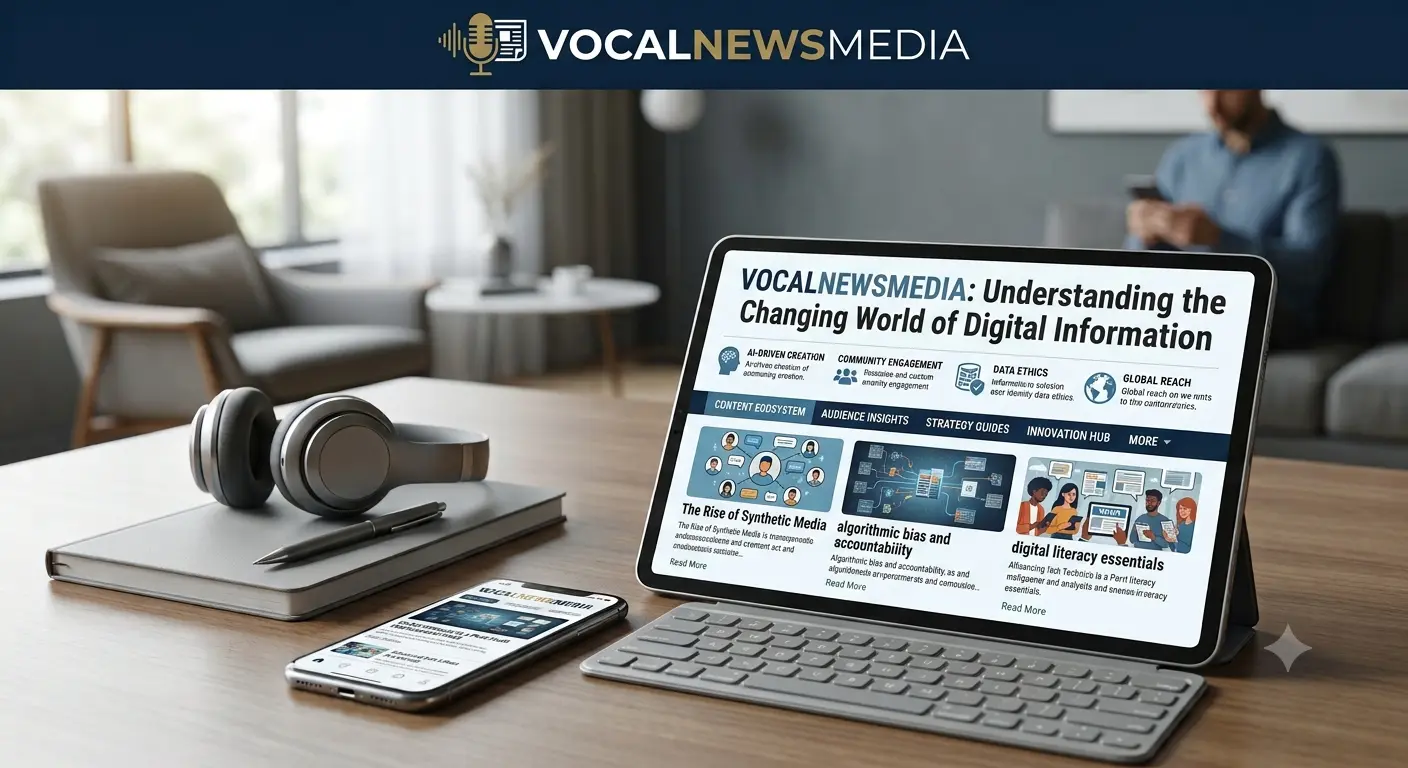
VocalNewsMedia represents this broader digital publishing landscape, where readers can explore stories, trends, developments, and practical information across different areas of interest.
But having access to more information doesn’t automatically make people better informed. Modern readers also need useful context, reliable sources, clear explanations, and the ability to distinguish important information from digital noise.
What Is VocalNewsMedia?
VocalNewsMedia can be understood as a digital media and publishing concept centered around online stories, news, trends, and informational content.
A publication operating within this space may cover subjects such as:
- Technology
- Artificial intelligence
- Business
- Finance
- Lifestyle
- Entertainment
- Education
- Travel
- Sports
- Digital trends
- World events
The purpose of digital publishing is not simply to distribute information.
It is to connect relevant information with readers in a format that is understandable, accessible, and useful.
Why Digital Information Matters
Information influences everyday decisions.
People search online before:
- Buying products
- Choosing destinations
- Learning new skills
- Understanding technologies
- Following current events
- Comparing services
- Exploring career opportunities
This makes the quality of digital information increasingly important.
1. The Information Cycle Is Now Continuous
Traditional media often operated around defined publishing schedules.
Digital media is different.
Stories can be updated throughout the day, while older articles can continue appearing in search results months or even years later.
This creates two different types of digital content:
Timely Content
Designed to address current events and emerging developments.
Evergreen Content
Designed to answer questions that remain relevant over time.
A strong digital publication can benefit from both.
2. Readers Expect Fast Answers
Online audiences often have specific questions.
They may want to know:
- What happened?
- What changed?
- Why does it matter?
- How does something work?
- What should I know?
- Where can I learn more?
Content that answers these questions clearly can provide more value than articles that simply repeat a headline.
3. Context Makes Information More Useful
A headline tells readers what happened.
Context helps explain why it matters.
For example, a technology announcement becomes more useful when an article explains:
- What the technology does
- Who developed it
- Who could use it
- What problem it addresses
- What limitations exist
- What could happen next
Context turns an update into understanding.
VocalNewsMedia and Technology
Technology is one of the fastest-changing areas of digital publishing.
4. Artificial Intelligence Is Reshaping Online Content
Artificial intelligence has become a major topic across industries.
People are interested in:
- AI tools
- Generative AI
- Automation
- AI search
- AI in business
- AI productivity
- AI education
- AI-assisted creativity
However, readers don’t always need highly technical explanations.
Often, they want to know:
What does this mean for me?
Practical explanations can make complicated developments easier to understand.
5. Technology Stories Need Clear Explanations
Technical terminology can quickly make an article difficult for general readers.
A better approach is to:
- Introduce the concept.
- Define unfamiliar terms.
- Explain how it works.
- Give a practical example.
- Discuss potential benefits.
- Mention important limitations.
This creates a more accessible technology story.
6. Evergreen Technology Content Has Lasting Value
Some technology questions are searched repeatedly.
Examples include:
- What is cloud computing?
- What is artificial intelligence?
- How does two-factor authentication work?
- What is a search engine?
- How does online storage work?
These topics can remain useful long after publication.
VocalNewsMedia and Business Stories
Business information affects more than executives and investors.
It can influence:
- Employees
- Consumers
- Entrepreneurs
- Small businesses
- Professionals
- Industries
7. Explain Business Developments in Practical Terms
A business announcement becomes easier to understand when readers know its potential impact.
An article might explain:
What happened?
Then:
Why does it matter?
And finally:
Who could be affected?
This structure makes business content more accessible to general readers.
8. Avoid Unnecessary Business Jargon
Terms such as “market capitalization,” “monetization,” or “customer acquisition cost” may be familiar to professionals but confusing to beginners.
When specialized terminology is necessary, explain it in plain language.
Clear communication expands the audience.
VocalNewsMedia and Lifestyle Information
Digital media isn’t limited to breaking news.
People also search for information that can improve everyday life.
9. Practical Lifestyle Content Solves Real Problems
Lifestyle publishing can cover:
- Home organization
- Travel
- Food
- Entertainment
- Personal routines
- Hobbies
- Productivity
- Digital habits
The strongest articles often answer a specific question or solve a practical problem.
10. Evergreen Guides Can Build Long-Term Value
Useful guides can remain relevant for months or years.
Examples include:
- Beginner guides
- Checklists
- Tutorials
- Planning resources
- How-to articles
- Explanatory content
Keeping this material updated can make it even more useful.
VocalNewsMedia and Social Media
Social media has transformed how people discover digital information.
11. Social Platforms Have Become Discovery Channels
Readers may discover an article through:
- X
- YouTube
- Short-form video
- Online communities
The website is no longer the only place where the audience encounters a story.
12. A Social Post Is Often the Beginning
A reader might see a short post and then visit the full article to understand the subject.
This creates a content journey:
Short message → Curiosity → Article → Deeper understanding
Publishers can use different formats at each stage.
13. Viral Content Needs Verification
A highly shared post isn’t automatically accurate.
Before accepting or sharing important information, readers should consider:
- Who published it?
- When was it published?
- Is there supporting evidence?
- Are other reputable sources reporting the same information?
- Is the headline accurately describing the story?
Popularity and reliability are different things.
Digital Media and Information Overload
One of the biggest challenges of modern publishing is not finding information.
It is managing too much of it.
14. Not Every Update Deserves Attention
People receive information from:
- News alerts
- Social media
- Emails
- Messaging apps
- Search engines
- Video platforms
Constant exposure can make it difficult to identify what actually matters.
A better approach is to prioritize information based on relevance.
15. Create a Personal Information Routine
Readers can make digital consumption more manageable by:
- Following reliable sources
- Limiting unnecessary notifications
- Checking news at specific times
- Saving useful reference articles
- Comparing sources for important topics
- Unfollowing low-value accounts
The goal is not to consume everything.
It is to consume information intentionally.
How to Evaluate Online Information
Digital literacy is increasingly important.
16. Check the Publication Date
Information can become outdated quickly.
This is especially important for:
- Technology
- Business
- Finance
- Travel
- Software
- Current events
Always check when an article was published or updated.
17. Look Beyond the Headline
Headlines are designed to summarize and attract attention.
They don’t always include important qualifications.
Read the article before forming a strong opinion or sharing it.
18. Examine the Source
Consider whether information comes from:
- An official organization
- A recognized publication
- An expert
- A primary document
- An anonymous social account
The source can provide important context about reliability.
19. Compare Important Claims
For significant subjects, compare information across multiple reputable sources.
This can help identify:
- Missing details
- Conflicting claims
- Corrections
- Different perspectives
- Areas of uncertainty
VocalNewsMedia and Search-Friendly Publishing
Search engines have become a major gateway to online information.
20. Understand Search Intent
Different searches represent different needs.
For example:
“What is digital media?”
The user wants an explanation.
“Digital media trends 2026”
The user wants current information.
“How to create digital content”
The user wants practical instructions.
Understanding intent helps publishers create the appropriate type of article.
21. Structure Content Around Questions
Question-based sections can make articles easier to navigate.
Useful headings include:
- What is it?
- Why does it matter?
- How does it work?
- What are the benefits?
- What are the limitations?
- Who can use it?
This structure also makes complex subjects easier to scan.
22. Give Direct Answers
Readers shouldn’t have to search through several paragraphs to find a basic answer.
A useful structure is:
Short answer → Explanation → Examples → Additional context
This serves both impatient readers and those who want deeper information.
23. Use Related Content
A publication can connect articles around broader subjects.
For example, a technology category might include:
- AI basics
- Technology trends
- Digital security
- Productivity tools
- Online privacy
Internal connections help readers move naturally between related subjects.
Mobile-First Digital Reading
Many readers consume information primarily through smartphones.
24. Make Content Easy to Scan
Mobile-friendly articles should use:
- Short paragraphs
- Clear headings
- Bullet lists
- Simple sentences
- Descriptive subheadings
- Relevant images
This reduces the effort needed to read on a small screen.
25. Put Important Information in Visible Places
Readers often scan before deciding whether to read deeply.
Important information can appear in:
- The introduction
- Section summaries
- Lists
- Tables
- FAQ answers
- Key takeaways
Good structure helps readers find value quickly.
Building Trust Through Better Publishing
Trust is one of the most valuable assets in digital media.
26. Accuracy Should Come Before Speed
Digital publishing makes it possible to publish quickly.
But speed shouldn’t replace verification.
Important facts should be checked before publication.
27. Separate Reporting From Opinion
Readers should be able to understand whether an article is:
- News
- Analysis
- Opinion
- Commentary
- Review
- Sponsored content
- Educational material
Transparency improves the reading experience.
28. Update Older Information
Some articles remain online long after their original publication.
If facts change, important pages should be reviewed.
This is especially relevant for:
- Technology guides
- Product information
- Travel advice
- Business information
- Digital tools
Creating Better Digital Stories
A consistent publishing workflow can improve quality.
Step 1: Identify the Audience
Know who needs the information.
Step 2: Choose a Specific Topic
Avoid trying to cover everything in one article.
Step 3: Research the Subject
Use reliable and relevant sources.
Step 4: Identify the Main Question
Understand what the reader actually wants.
Step 5: Build an Outline
Arrange the information logically.
Step 6: Write the Direct Answer
Give readers the key information early.
Step 7: Add Context
Explain why the subject matters.
Step 8: Add Examples
Use practical examples where they improve understanding.
Step 9: Edit and Verify
Check facts, language, and structure.
Step 10: Publish and Review
Use audience feedback and performance data to improve future content.
Content Formats That Can Work Together
Modern digital publishing doesn’t require choosing one format.
A single topic can become:
| Format | Purpose |
|---|---|
| Article | Detailed explanation |
| Short post | Quick takeaway |
| Video | Demonstration |
| Infographic | Visual summary |
| Newsletter | Curated information |
| FAQ | Direct answers |
| Guide | Practical instruction |
Using multiple formats allows the same idea to reach different types of readers.
Common Digital Publishing Mistakes
Chasing Every Trend
Not every trending topic is relevant to your audience.
Writing Only for Search Engines
Content should be useful to people first.
Using Sensational Headlines
Overpromising can damage trust.
Publishing Without Research
Unverified claims can spread quickly.
Ignoring Older Articles
Outdated content can become misleading.
Making Content Too Complicated
Complex subjects can still be explained clearly.
Measuring Only Traffic
High traffic doesn’t necessarily mean high value.
10 Principles for Better Digital Information
- Start with the reader’s question.
- Use clear and descriptive headlines.
- Answer important questions early.
- Provide meaningful context.
- Verify significant claims.
- Make articles easy to scan.
- Use visuals when they add genuine value.
- Combine timely and evergreen content.
- Keep important information updated.
- Build trust through consistency and transparency.
Frequently Asked Questions
What is VocalNewsMedia?
VocalNewsMedia can be understood as a digital media and publishing concept focused on online news, stories, trends, and informational content.
What topics can a digital media platform cover?
It can cover technology, artificial intelligence, business, finance, lifestyle, entertainment, education, travel, sports, and other subjects relevant to online audiences.
Why is context important in digital publishing?
Context helps readers understand why something happened, what it means, who may be affected, and how it connects to broader developments.
How can readers identify reliable online information?
Check the publication date, examine the source, look for supporting evidence, read beyond the headline, and compare important claims with reputable sources.
Why is evergreen content useful?
Evergreen content answers recurring questions and can continue providing value long after its original publication date.
How can readers avoid information overload?
Follow a manageable number of reliable sources, reduce unnecessary notifications, set specific times for checking updates, and focus on topics that matter to you.
Conclusion
VocalNewsMedia reflects the changing nature of digital information and the way people discover stories today.
Readers have more access to information than ever before, but that access also creates new challenges.
Good digital publishing must balance speed with accuracy, accessibility with depth, and attention with genuine value.
The most useful content isn’t necessarily the loudest.
It is the content that answers meaningful questions, explains complicated subjects clearly, provides appropriate context, and helps readers understand what they are seeing.
As search, social media, mobile technology, video, and artificial intelligence continue to reshape digital publishing, the fundamentals remain important.
Be useful. Be clear. Be accurate. Give readers a reason to trust the information you provide.
That is what can turn an ordinary online story into a valuable digital resource.